Understanding Anxiety
Anxiety is a great thief. It can rob you of the most precious things.
- It can take away your peace of mind, your confidence and your sense of self
- It can steal away your ability to think clearly, your productivity and your ability to do your work and to accomplish things
- It can make you uncertain of what to do first and what to do next
- It steals your patience and interferes with your ability to show up for family and friends and keeps you from sharing your gifts with
- them
- It interferes with your ability to trust those who love you and those who could help you the most
- It cheats you out of happiness and enjoyment
- It pirates your ability to dream and to look forwards to enjoyable events and a future you would love
- It robs you of restorative sleep and takes away your energy and your ability to care for yourself.
- Anxiety and stress can swindle you from good health and the expectation of a long life
- In exchange for what it takes, anxiety brings confusion, muddled thoughts, lack of purpose, restlessness, exhaustion, doubt, and hopelessness
We would never willingly stand for being robbed in such a profound way
How can we fight against such a devious and conniving enemy?
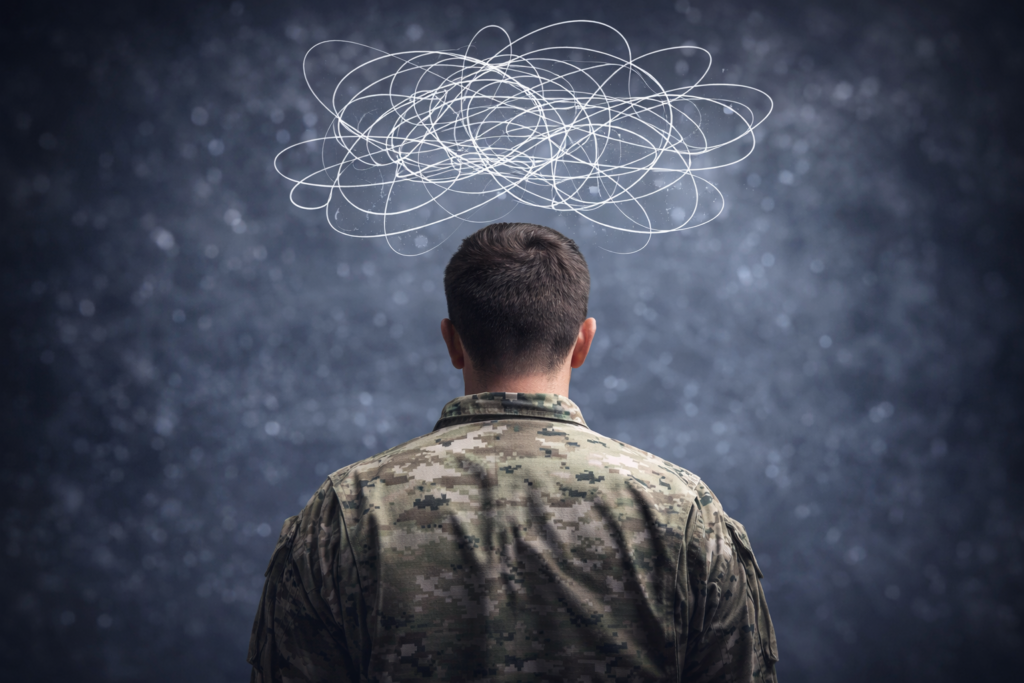
A visual representation of internal stress and anxiety experienced by those who serve.
When you were little, you could hug a teddy bear or suck your thumb. Hopefully there was someone who was strong and reassuring whose lap you could crawl into to be cuddled and soothed.
Where do we find that kind of comfort as adults?
Sadly, many seek it in a bottle or from tablets, potions or smoke. Others seek physical connections with others in unhealthy ways. Others distract themselves by willfully taking risks
There must be a better way because these coping mechanisms only bring more anxiety in the long run.
Albert Einstein said, “we cannot solve problems by using the same kind of thinking we used when we created them”.
I believe we can’t always find solutions without exploring other realms.
How do we get there?
Most of us spend most of our lives in the mundane. We go about in our worlds of common place practicalities, paying attention only to what we see around us.
We respond to what is before us, address the chores and responsibilities that have been thrust upon us, and expect our rewards to be what society’s consensus dictates should satisfy us.
Mark Twain stated that worry is the misuse of imagination. We conjure up scary scenarios, contemplate horrific tragedies and think about loss, poverty and loneliness. When our anxiety becomes crippling to the point that we lose our very selves, the fear of rejection and abandonment becomes all the more acute.
We get to higher realms that can deliver us from anxiety by recognizing and utilizing specific gifts we rarely use.
Our imagination was meant for creativity. Our imagination should be the vehicle that transports us to visions of a greater future, of a life we would love to live.
Tied to our imagination and our creativity is our intuition and our inspiration. These great gifts allow us to rise to a new vantage point where brilliant solutions and possibilities are presented. An even higher realm of contemplation of our life’s predicaments is possible if we can connect with more powerful thinking; the source of all creativity and inspiration. This type of thinking is not accomplished through our frazzled, worried brains, but comes to us as a deep knowing. It brings about the belief that somehow everything is under control.
There is ample evidence around us that there are great unseen forces at work. These can be obvious like the law of gravity, or much more subtle as in the laws of entropy, thermodynamics or electromagnetism. When we realize how little control we actually have in directing unexpected life events, it makes sense to adjust our thinking so that we align ourselves with the more powerful forces of nature. We can’t direct the waves but we can learn to surf them.
We can’t protect ourselves or our loved ones from bad luck or tragedy, but we can understand that these experiences are part of the inheritance of our human condition and that we can survive all the emotion and hardship that comes with it. Humans throughout history have.
We can seek to better understand and learn to heed our intuitions so we can make better decisions and seize opportunities. We can commit to taking better care of our minds and bodies so we may be stronger agents for these forces and more effective servants to humanity. When we give ourselves up to what the grand design has assigned to us, there is peace.
We can decide that we will accept what comes with grace. What is grace? Grace is a state of being. It is strength through submission, maturity through curiosity and wonder, resilience through faith, and optimism through trust. Grace is what gives us peace. It makes us coherent with the unseen forces that conduct the happenings in the world. Grace makes us realize that we are meant to live through the challenges we are given so that we may grow and become even more wise and humble servants.
Anxiety may be the greatest of thieves, but grace gives everything back and brings with it even more gifts.